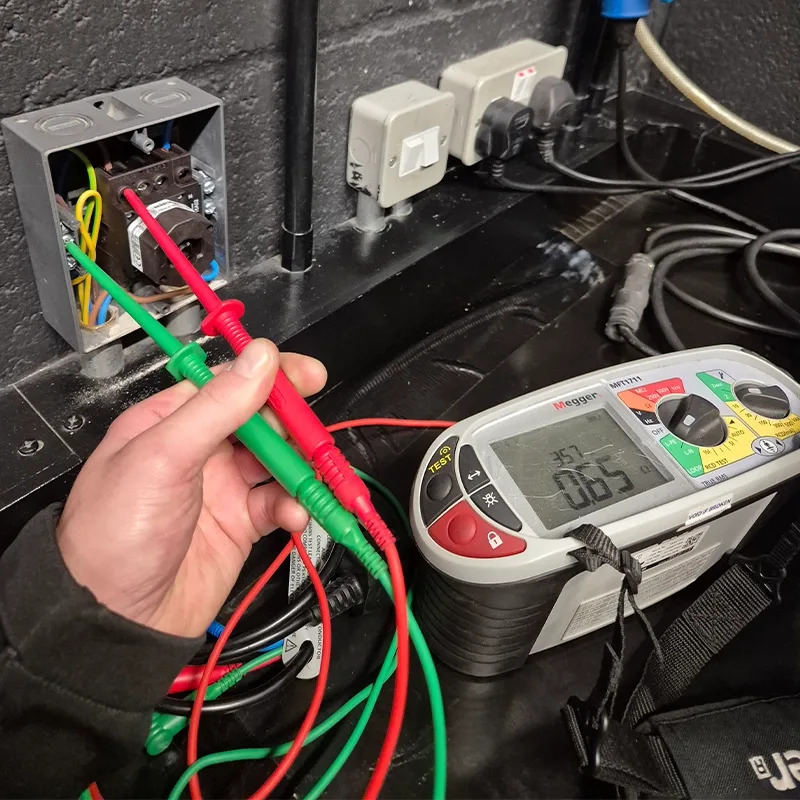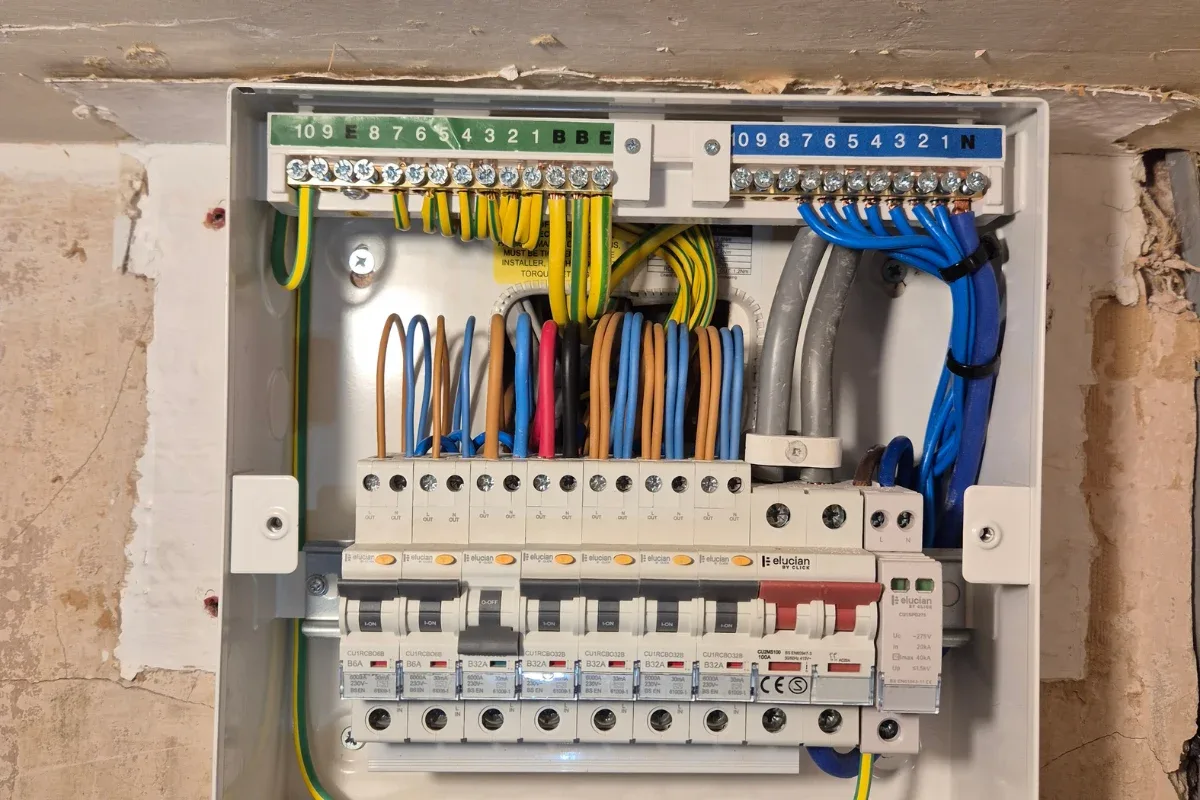
Signs a home may need rewiring include an old fuse box with rewireable fuses, frequent tripping, warm or discoloured sockets, a burning smell, cloth or rubber-insulated cabling, and not enough sockets. If your home has not been rewired in decades it is worth an inspection. A full rewire brings the installation up to current standards with a new consumer unit and individual circuit protection.
Electrical wiring does not last forever. The cabling, sockets and fuse board in an older property were installed for the demands of their day, and decades of use, heat and general wear gradually take their toll. The good news is that a home rarely goes from safe to dangerous overnight. It usually gives you plenty of warning signs first. Knowing what to look for means you can plan ahead and get the work done before a small problem becomes a serious one. Here are the signs we see most often on homes across Dudley and the West Midlands.
Old Fuse Boxes and Rewireable Fuses
The consumer unit, or fuse board, is one of the clearest indicators of a home's electrical age. If yours still uses rewireable fuses, with fuse wire that you replace by hand, or has a wooden back or cast-iron switches, it belongs to an installation that is likely to be several decades old. Boards like this lack the protection that current regulations call for.
- Rewireable fuses: These offer far less protection than a modern circuit breaker or RCBO and give no protection against electric shock.
- No RCD protection: Older boards often have no residual current device, which is the safety component that trips in a fraction of a second if there is a fault to earth.
- Mixed or added-on circuits: A board that has been added to over the years, with extra circuits bolted on, is often a sign the wiring behind it is reaching its limits.
Frequent Tripping and Blown Fuses
The occasional trip is normal, usually caused by a faulty appliance. Regular tripping is not. If your breakers keep tripping or your fuses keep blowing, the installation is trying to tell you something.
- Repeated trips on the same circuit: This often points to a damaged cable, an overloaded circuit or deteriorating insulation.
- Trips with no obvious cause: If you cannot trace it to a single appliance, the fault may be in the fixed wiring itself.
- Blown fuses becoming more frequent: Wiring that once coped fine but now struggles is a sign of age and increased electrical demand in the home.
Worried About Your Wiring?
Call Volt Tech on 01902 219857. We carry out honest inspections and free quotes for rewires across Dudley and the West Midlands.
Call for a Free QuoteWarm Sockets, Burning Smells and Old Cabling
Some of the most important warning signs are ones you can see, feel or smell. Any of these should be treated seriously, and a burning smell in particular needs immediate attention.
- Warm or discoloured sockets and switches: A socket or switch that feels warm to the touch, or has scorch marks or brown discolouration around it, points to a loose connection or overheating behind the faceplate.
- A burning smell: A faint smell of burning plastic near a socket, switch or the fuse board is a serious warning. Stop using the circuit and call a qualified electrician straight away.
- Old cloth or rubber-insulated cabling: Homes wired before the 1960s and 1970s often have cabling insulated with cloth or rubber rather than modern PVC. This insulation becomes brittle and crumbles with age, exposing the conductors. If you spot fabric-covered or perished cabling in the loft or under the floor, the property almost certainly needs rewiring.
Too Few Sockets and Flickering Lights
Older homes were simply not designed for the number of devices we use today. If your daily routine involves working around the wiring rather than the other way round, the installation has been outgrown.
- Not enough sockets: If most rooms have only one or two sockets and you rely on extension leads and multi-way adaptors, the circuits were never intended for that load. Overloading in this way generates heat and increases risk.
- Flickering or dimming lights: Lights that flicker, or dim when an appliance switches on, can indicate loose connections or circuits that are struggling to cope.
- Buzzing or crackling: Any buzzing from sockets, switches or the fuse board is not normal and should be checked.
What a Rewire Involves
A rewire replaces the old fixed wiring throughout the property with new cabling, and brings the whole installation up to current standards. Here is what to expect.
- Assessment first: We inspect the existing installation, discuss how you use each room and agree the scope. In many cases a partial rewire is enough, and we will tell you honestly if that is the case.
- Out with the old: The old cabling is stripped out and new cable is run from the meter through to every socket, switch and lighting point. Floors are lifted and walls are chased where cables need to run properly.
- A new consumer unit: The work is finished with a new consumer unit giving individual protection on every circuit, plus surge protection for the whole installation.
- New accessories: New sockets, switches and lighting points are fitted, and we can add extra sockets so you are no longer relying on extension leads.
- Tested, certified and made good: Everything is tested and certified, and where walls have been chased we can arrange a reliable plasterer to patch and make good afterwards.
Volt Tech carry out both full and partial rewires, always finished with a new consumer unit, across Dudley and the West Midlands. A standard three-bedroom rewire usually takes around five working days if the property is empty. If you have noticed any of the signs above, the safest next step is a proper inspection so you know exactly where you stand.
Frequently Asked Questions
Only an inspection can tell you for certain. If the cabling is old but sound in parts of the property, a partial rewire may be all that is needed. Where the wiring is perished throughout or the installation is very old, a full rewire is the safer choice. We always give honest advice on which is right for your home.
A standard three-bedroom house usually takes around five working days if the property is unoccupied. Occupied homes or larger properties can take a little longer, as we work room by room to keep disruption down.
Some disruption is unavoidable because cables need to run inside walls and under floors. We work cleanly, keep mess to a minimum and, where walls have been chased, we can arrange a reliable plasterer to make good once the electrical work is complete.
Yes. A burning smell near a socket, switch or fuse board can mean a connection is overheating. Stop using that circuit, switch it off at the board if you can do so safely, and call a qualified electrician straight away.
Yes. Every rewire is tested and certified in line with NICEIC requirements. You receive the certification for the completed work, which is important for safety, insurance and when selling or letting a property.