An EICR (Electrical Installation Condition Report) checks the safety and condition of a property's electrical installation. Private landlords in England must have a valid EICR at least every five years and provide a copy to tenants. A qualified electrician tests each circuit, records any issues by code, and issues a certificate. Where remedial work is needed, it should be completed and confirmed within 28 days.
If you let a property in the West Midlands, the electrical safety of that home is your legal responsibility. Since 2020 the rules for private landlords in England have been clear, and an Electrical Installation Condition Report, or EICR, is central to meeting them. This guide explains what an EICR is, what the law requires of you, what actually happens on the day and what the results mean, so you know exactly where you stand.
What Is an EICR?
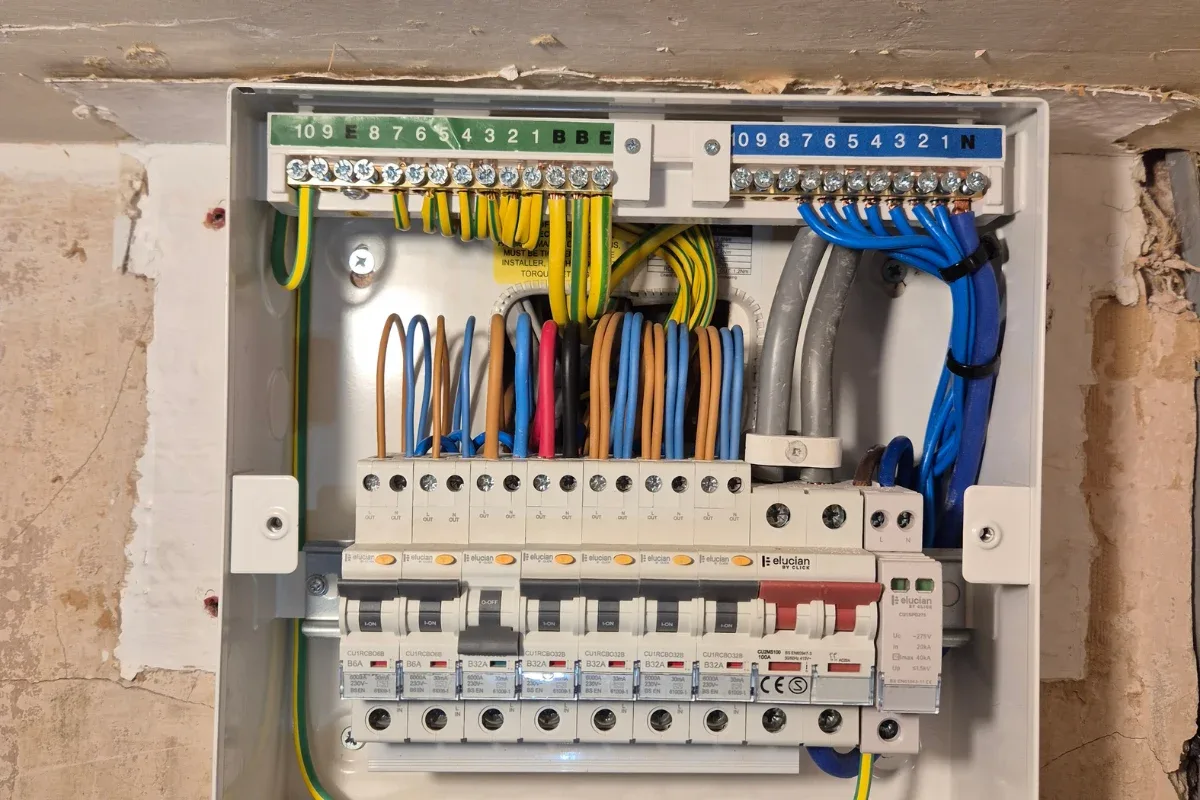
An Electrical Installation Condition Report is a formal inspection and test of the fixed electrical installation in a property. That means the wiring, sockets, switches, light fittings and the consumer unit, rather than portable appliances. A qualified electrician examines and tests the installation, then records its condition in a detailed report.
The report tells you whether the installation is safe for continued use and flags anything that does not meet the current wiring regulations. It is the recognised way to demonstrate that a property's electrics are safe, which is exactly why it sits at the heart of the rules for rented homes.
The Legal Requirement for Landlords
Under the Electrical Safety Standards in the Private Rented Sector (England) Regulations, private landlords have clear duties. In plain terms, these are the key points.
- A valid report at least every five years: The installation must be inspected and tested by a qualified person at least once every five years, and more often if the previous report specifies it.
- A copy to your tenants: You must provide a copy of the report to existing tenants within 28 days of the inspection, and to any new tenant before they move in.
- Remedial work confirmed within 28 days: Where the report identifies work that is required, it must be carried out within 28 days, or sooner if the report states a shorter timescale, and you must obtain written confirmation that the work has been completed.
- Records on request: You must be able to supply the report to your local authority if it asks for it.
Meeting these duties protects your tenants and protects you as a landlord. Failing to comply can lead to significant financial penalties from the local authority.
Need an EICR for Your Rental?
Call Volt Tech on 01902 219857. We provide NICEIC-certified EICRs from £18 per circuit across Dudley and the West Midlands.
Book Your EICRWhat Happens During the Inspection
An EICR is a thorough, methodical process. To test the installation properly the power needs to be switched off for parts of the inspection, so it is worth planning around that with your tenant. Here is what the electrician does.
- Visual inspection: A careful check of the consumer unit, accessories and visible wiring for damage, wear, overheating or anything that does not meet the standards.
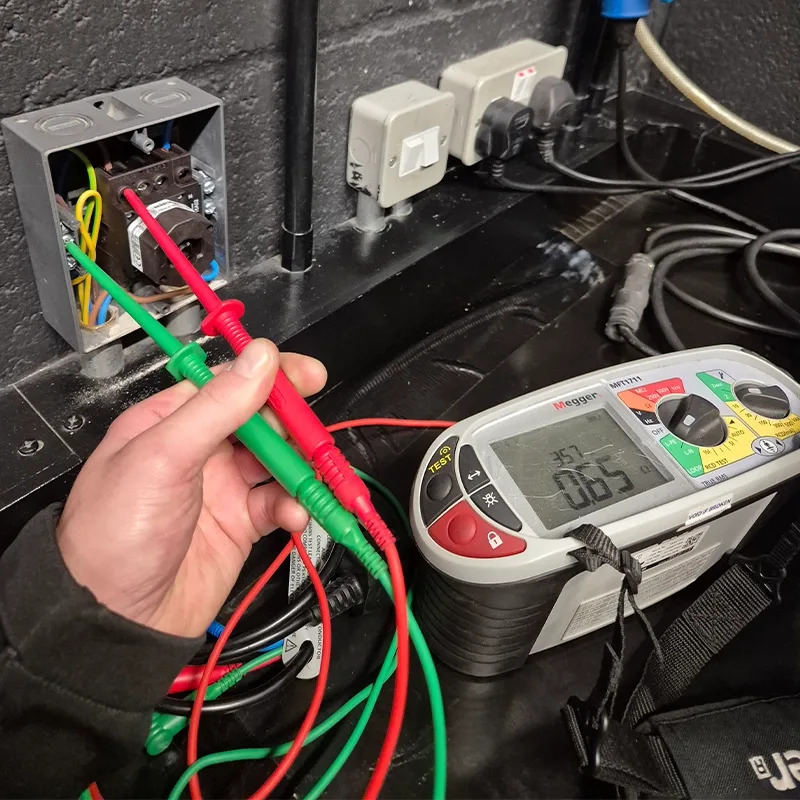
- Circuit-by-circuit testing: Each circuit is tested in turn using calibrated instruments, checking things like insulation resistance, earth continuity and the operation of the protective devices.
- Recording the findings: Every observation is logged and given a classification code, so nothing is left open to interpretation.
- The report and outcome: The installation is recorded as either satisfactory or unsatisfactory overall, and you receive the full report with each circuit clearly labelled.
Understanding the Observation Codes
Any issues found are recorded against a standard set of observation codes. Understanding these codes tells you at a glance how serious a finding is and whether action is needed.
- C1, Danger present: A risk of injury exists and immediate action is required. The electrician will make it safe where possible before leaving.
- C2, Potentially dangerous: Urgent remedial work is needed. A report with any C1 or C2 code is classed as unsatisfactory.
- C3, Improvement recommended: Not dangerous, but improving it would bring the installation more in line with current standards. A C3 on its own does not make a report unsatisfactory.
- FI, Further investigation: Something needs investigating further to determine whether it presents a risk. Like C1 and C2, an FI makes the report unsatisfactory.
If your report comes back unsatisfactory, do not panic. It simply means specific items need attention. We provide a clear quotation for any remedial work so you can bring the installation up to standard and get the written confirmation you need within the 28-day window.
How Long It Takes
The time an EICR takes depends on the size of the property and the number of circuits, along with the age and condition of the installation. As a rough guide, a newer installation takes around fifteen minutes per circuit, while older systems can need up to twenty minutes per circuit for the more detailed checks. A typical two or three-bedroom home is usually completed within a few hours.
Volt Tech provide NICEIC-certified EICRs from £18 per circuit for domestic, commercial and industrial properties across Dudley and the West Midlands. You receive full certification by email with each circuit clearly labelled, plus honest, straightforward advice on anything that needs putting right.
Frequently Asked Questions
Private landlords in England must have the installation inspected and tested at least every five years, and more often if the previous report requires it. A copy of the report must be given to tenants within 28 days.
An unsatisfactory report means one or more items coded C1, C2 or FI need attention. The remedial work must be completed within 28 days, or sooner if the report states, and you must get written confirmation it has been done. We provide a clear quotation so you can proceed quickly.
It depends on the number of circuits and their condition. Newer installations take around fifteen minutes per circuit and older ones up to twenty. A typical two or three-bedroom home is usually completed within a few hours.
Yes, the power needs to be switched off for parts of the testing so each circuit can be checked safely. We keep this to a minimum and let your tenant know what to expect, so it is worth arranging access at a convenient time.
Volt Tech charge from £18 per circuit for NICEIC-certified EICRs, so the total depends on the number of circuits in the property. We are always happy to confirm the cost before we start, with no hidden extras.